A peaceful Waterbuck roaming Uganda’s majestic wilderness
Uganda, often celebrated as the “Pearl of Africa,” is renowned for its rich wildlife and stunning landscapes, home to a wide variety of animal species. Among these is the waterbuck (Kobus ellipsiprymnus defassa), a large antelope species with a distinctive appearance and a remarkable adaptation to aquatic environments. In Uganda, waterbucks thrive in several national parks and game reserves, adding to the country’s allure as a top destination for wildlife enthusiasts. Understanding the unique features, behavior, and conservation of waterbucks is key to appreciating their place within Uganda’s biodiversity.
Physical Characteristics of Waterbucks
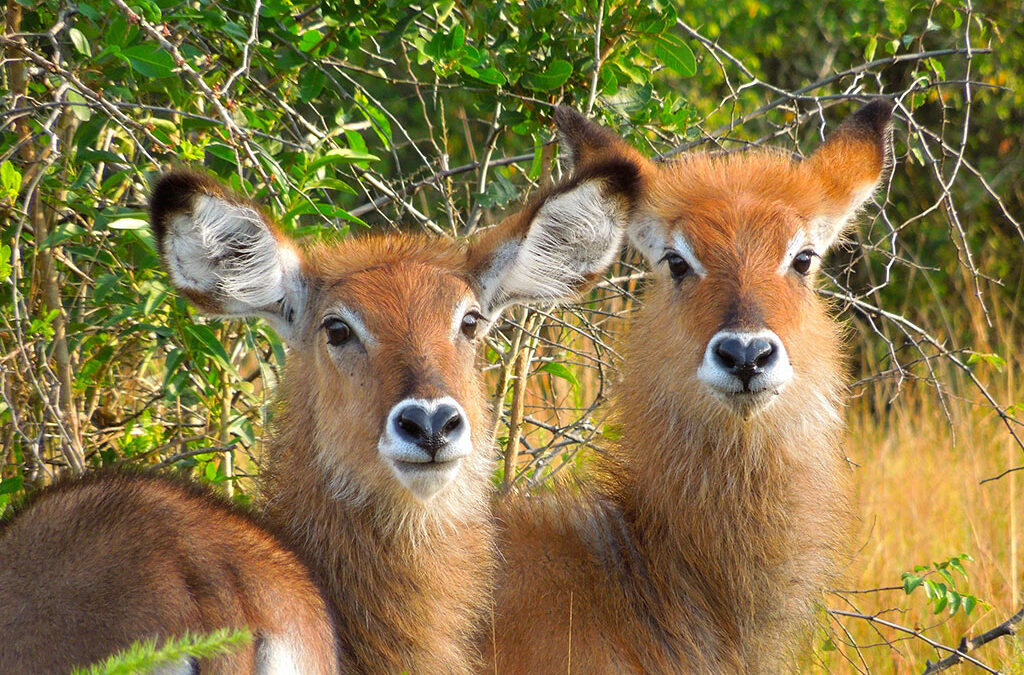
Waterbucks are easily recognizable by their shaggy coats, which can vary in color from grayish-brown to reddish-brown, depending on the individual and their age. This coat serves as an important adaptation to their environment, offering protection against parasites and helping them blend into their natural surroundings. One of the most iconic features of the waterbuck is the white ring of fur around their rump, a distinctive marking that contributes to their name.
Both male and female waterbucks possess long, forward-curving horns, though the horns of males are typically more robust and longer. These horns are not only used for defense but also play a role in establishing dominance within their social structure. The thick, oily nature of their fur also helps them resist water, as waterbucks often dwell near aquatic environments, living up to their name. They are excellent swimmers, and their semi-aquatic lifestyle helps them avoid predators, adding another layer to their remarkable adaptability.
Habitat and Distribution
Waterbucks are primarily found across sub-Saharan Africa, with Uganda being home to a healthy population. Their preferred habitats include savannas, grasslands, and areas near water sources such as rivers, lakes, and wetlands. In Uganda, waterbucks are commonly found in protected areas like Murchison Falls National Park and Queen Elizabeth National Park, where they can access the grasslands and water sources essential to their survival.
The proximity to water plays a critical role in their lives. Not only does it provide hydration, but it also serves as a strategic defense mechanism against predators. When threatened by lions, hyenas, or other predators, waterbucks often retreat to the water, where their swimming ability gives them an advantage. Their habitat choices also allow them to graze on a variety of vegetation, further contributing to their survival in these diverse ecosystems.
Behavior and Social Structure
Waterbucks exhibit distinctive behavior that reflects their territorial nature and social organization. Adult males establish territories, marked with secretions from facial glands, to attract females. These territories are defended vigorously, with males engaging in displays of dominance using their horns. The battles between males are usually non-lethal, but they can be intense as each seeks to control a prime area rich in food and water.
Females, on the other hand, form herds with their offspring, often led by a dominant male. These herds provide protection against predators, as waterbucks are more vulnerable when isolated. The hierarchical social structure within these groups helps maintain order, with the dominant male having mating rights with the females in his territory. Although waterbucks are generally peaceful within their groups, they maintain a level of alertness, especially when in areas where predators are common.
Feeding Habits
Waterbucks are herbivores with a diverse diet that includes grasses, leaves, and aquatic vegetation. They are primarily grazers but are also capable of browsing, which allows them to exploit a variety of food sources. Their diet varies depending on the season and availability of food, but the proximity to water bodies ensures a constant supply of fresh, lush vegetation, especially during dry periods.
This adaptability in feeding allows waterbucks to thrive in areas where other herbivores might struggle, particularly in Uganda’s savannas and wetlands. During the rainy season, they tend to graze on young, tender grass, while in the dry season, they are more reliant on browsing trees and shrubs for sustenance.
Lifespan and Predation
In the wild, waterbucks have an average lifespan of 10 to 15 years. Their longevity, however, depends on various factors, including the quality of their habitat, predation, and disease. In captivity, where they are protected from predators and have a consistent supply of food and veterinary care, they can live longer.
Predators such as lions, leopards, and hyenas pose a constant threat to waterbucks. While their impressive size and ability to seek refuge in water offer some protection, young and isolated individuals are particularly vulnerable. Other natural threats include parasites and diseases that are prevalent in their wetland habitats.
Conservation Status and Threats
Waterbucks are currently listed as a species of “Least Concern” by the International Union for Conservation of Nature (IUCN), which indicates that their populations are stable across most of their range. However, localized threats, including habitat loss and human-wildlife conflict, could significantly affect their populations in the future.
Human encroachment into wildlife habitats is a major challenge, especially as land is converted for agriculture, settlements, and infrastructure development. In some areas, waterbucks are hunted for their meat and horns, although poaching is less common compared to other species like elephants and rhinos. Additionally, as human populations grow and spread, waterbucks may come into conflict with farmers, leading to retaliatory killings or displacement.
In Uganda, several national parks and wildlife reserves play a critical role in the conservation of waterbucks. Protected areas like Murchison Falls and Queen Elizabeth National Parks provide not only a safe haven for waterbucks but also contribute to the country’s thriving eco-tourism industry, which helps fund conservation efforts. Anti-poaching initiatives, community engagement, and education programs are vital components of these efforts, helping to safeguard the habitats of waterbucks and reduce conflicts between humans and wildlife.
Sustainable Tourism and the Future of Waterbuck Conservation
Sustainable tourism is a key element in the protection of waterbucks and other wildlife in Uganda. National parks and reserves offer visitors a chance to witness these magnificent creatures in their natural habitat while contributing to conservation initiatives. Revenue from tourism helps fund the management of protected areas, anti-poaching patrols, and community programs that promote coexistence between wildlife and local people.
As Uganda continues to develop its eco-tourism sector, it is crucial that conservation efforts remain at the forefront of these initiatives. The waterbuck, with its unique features and semi-aquatic lifestyle, is a symbol of Uganda’s natural heritage, and preserving their habitats will ensure that future generations can enjoy these animals in the wild.